
Sell Like a Doctor, Not a Salesman
Why the icky feeling disappears the moment you stop trying to close

Plenty of founders, especially technical ones, quietly dread selling. The picture in your head is the used-car salesman moving a bad product to someone who doesn’t need it, and you don’t want to be that person. So you try to design selling out of the company: credit-card-only signup, a free trial, anything that avoids getting on a call and pitching. The problem is that scaling revenue, landing stickier customers, and closing bigger deals all run through your ability to sell. No strong salesperson will bet their career on a founder who can’t close.
The good news is that the dread comes from a wrong definition of the job. Get that right and a founder-led process can run above a 50% win rate, and it holds up when you hand it to the salespeople you hire later. Three principles, plus the step most founders skip.
The reframe that makes it bearable
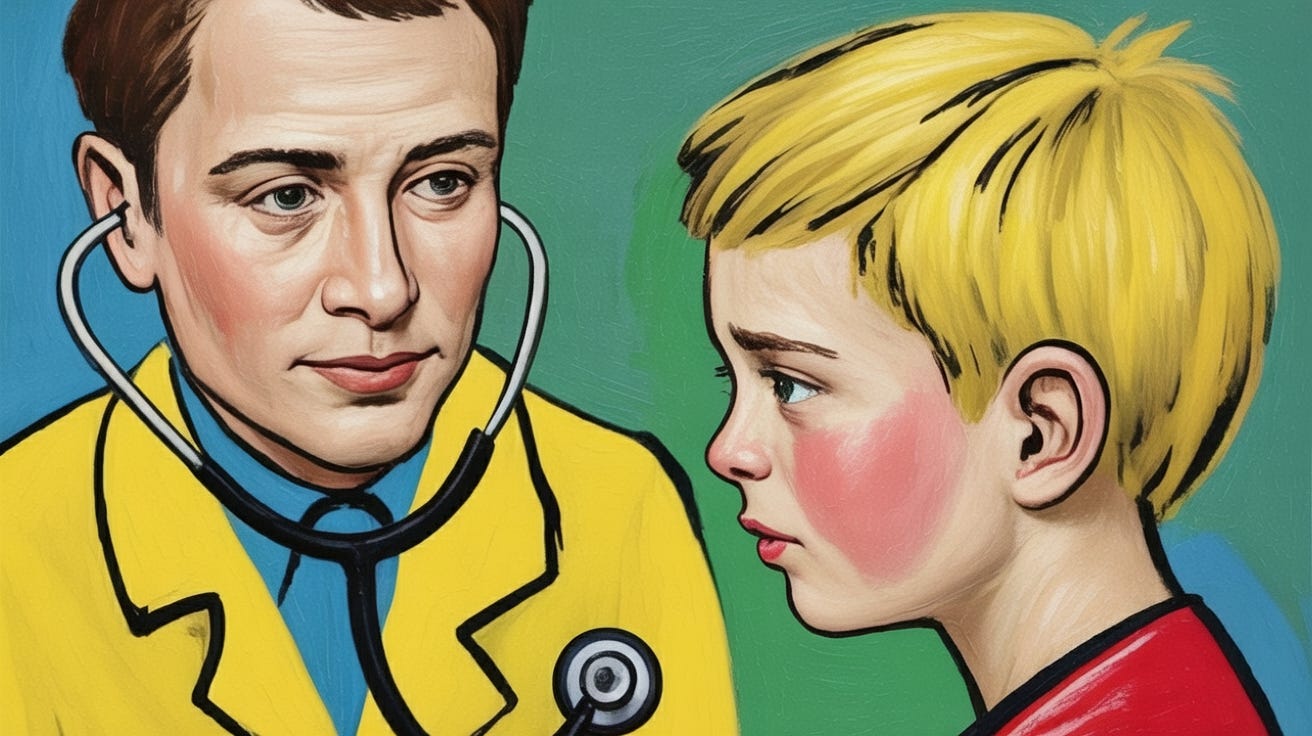
The unlock has nothing to do with closing technique. It’s that selling isn’t convincing someone to buy; it’s getting clear, fast, on whether they should. Once a sales call becomes a diagnosis instead of a pitch, the icky feeling goes away, because you’re no longer talking anyone into anything. You’re a doctor figuring out what’s wrong, and sometimes the honest answer is that this person isn’t your patient. The win rate is a byproduct of disqualifying early, before you’ve sunk hours into the wrong buyer.
Principle one: never go outbound
The first rule is blunt. Don’t do outbound, ever. Get the prospect to come to you. Expect them to fill out a form with real information about their company and role, and book a call on your calendar. Part of the reasoning is timing. Ten years ago a personalized cold email landed because almost nobody was sending them at scale. Today every inbox filters AI-written outreach into the promotions tab, and your prospect already knows an SDR agent wrote it. Outbound is a loser’s game: the response rate sits around 1%.
There’s a corollary worth coaching into every rep: once a meeting lands, you’re allowed to delete it. Look the person up on LinkedIn, check their company, and if they’re outside your ideal customer profile, decline politely and free both calendars. Tell them you want to respect their time and yours, and ask them to correct you if you’ve got it wrong. Protecting reps from bad-fit meetings keeps them working pipeline that actually moves.
And don’t confuse sales and marketing. Getting people to book is a marketing job, turning those bookings into revenue is the sales job, and conflating the two is a common founder mistake.
Principle two: never sell, diagnose
When the prospect shows up, the instinct is to launch into why your product is great. Don’t. The call opens with a question: you could be doing anything right now, so what’s going on in your company that made you book this? Then keep probing. How are you generating pipeline today? What have you already tried? Where are you in the buying process? What specifically are you looking for? None of that is you talking.
Call-analysis tools score how much of a call the rep spoke versus the prospect, and on a strong call the rep is mostly quiet. Drop a transcript into your favorite LLM and ask it to grade the call, and that talk ratio is the first thing it flags. The quality of the questions you ask sets the quality of the call, and the prospect describing their own problem out loud is worth more than any feature you could recite at them.
Principle three: never give a generic demo
The biggest founder mistake isn’t skipping the questions, it’s demoing blind. You’ve got a product with real surface area, every feature maps to some outcome, and people only buy outcomes. So before you share your screen, ask what matters to them. There’s a lot I could show you; what would actually be relevant? If they can’t name a feature, fine, they’ll name an outcome, and you build the demo around that. A walkthrough of everything you’ve shipped is the fastest way to lose a call you’d already half-won.
The rebuttal clever founders reach for is that the product is too new for prospects to know what to ask for. Sometimes true. But even then they’ll tell you the outcome they’re chasing, and an outcome is enough to personalize around. You’re not waiting for them to spec the demo; you’re listening for what they actually want the thing to do.
The step founders skip: define the next step
Here’s the part founders learn the hard way and young ones blow constantly. You run a sharp diagnostic call, you give a tailored demo, and then you close with “cool, I guess I’ll follow up.” That deal is dead.
What you send depends on the deal. A 20-to-30K mid-market deal should close in one call, maybe one and a half, so you send the proposal then. A million-dollar enterprise deal is a six-to-eight-month motion, so the deliverable is a clearly defined next step, not a contract. Either way you budget for it. On a 30-minute call: ten minutes asking why they’re here, ten minutes on questions and a personalized demo, ten minutes defining what happens next, down to who else needs to be in the room.
What you’re actually building
Notice that none of this is advice is closing technique. Come-to-you instead of outbound, diagnose instead of pitch, personalize the demo instead of dumping features, and always name the next step: every principle pulls in the same direction, which is toward telling the truth about fit faster than the other guy. That’s why the dread lifts. You’re not learning to talk people into things; you’re learning to find out, early and on purpose, who you can genuinely help and who you can’t.
That’s also why the playbook survives the handoff. A process built on persuasion lives and dies with the person doing the persuading, so it never transfers. A process built on honest diagnosis is just a set of questions and a discipline, and questions and discipline are teachable. Run it yourself until the win rate proves it works, then hand the salespeople you hire a system they can trust their careers to. Get selling right while it’s still your job, and you build something that keeps selling long after it stops being your job.